
OEE is Useless?

OEE is Useless?

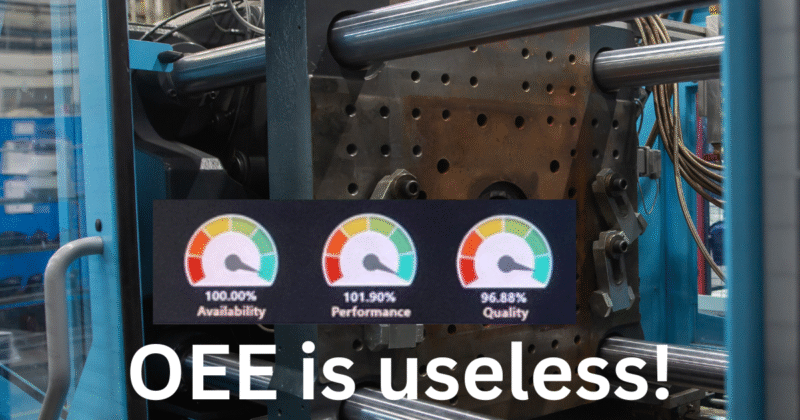
Is having OEE useless? Overall Equipment Effectiveness (OEE) has long been a standard metric in manufacturing to evaluate how well a process is running—based on Availability, Performance, and Quality. A high OEE typically signals an efficient operation. But here's the catch:OEE is a rearview mirror 😊 great for knowing what happened, but useless unless you can act on it.Today, with Industry 4.0 taking root and SMEs pushing for smart manufacturing transformation, collecting OEE data is no longer the challenge. The real value lies in what you do with that data.So how do you turn OEE into a forward-looking, action-driven tool?3 Steps to Make OEE Truly Useful:Get Insightful Data. Don’t just chase the OEE number. Break it down. Understand the underlying variables and their impact.Track the 6 Big Losses - Identify leakages in productivity. (If you missed our earlier post on this, you can find in my last posting!)Act with Purpose - Use data-driven insights to implement continuous improvement plans -targeted, trackable,...
Read More
IoT is dead?

IoT is dead?

These days, it feels like everyone is talking about AI. Whether you're at a conference, a cafe, or scrolling social media AI is everywhere. So, it’s no surprise that some people are asking:“Has AI taken over everything? Is IoT still relevant? Is IoT dead?”As someone deeply involved in tech, I can confidently say:IoT (Internet of Things) is not dead — it's more important than ever.You may wonder why?..  Before we had AI in the spotlight, industries were already using machines to talk to each other. That’s called M2M (Machine-to-Machine). Later, it evolved into IoT, where smart devices collect and share data over the internet.Now with AI booming, that data becomes even more valuable. AI needs data to learn and make decisions and most of that data comes from IoT devices.I recently shared this at a Bernama interview on behalf of the (MYIOTA) Malaysia IoT Association:“AI is hungry for data. IoT is the one feeding it. Without IoT, AI can’t function.” .....
Read More
AIoT OEE Insight Connect in action

AIoT OEE Insight Connect in action

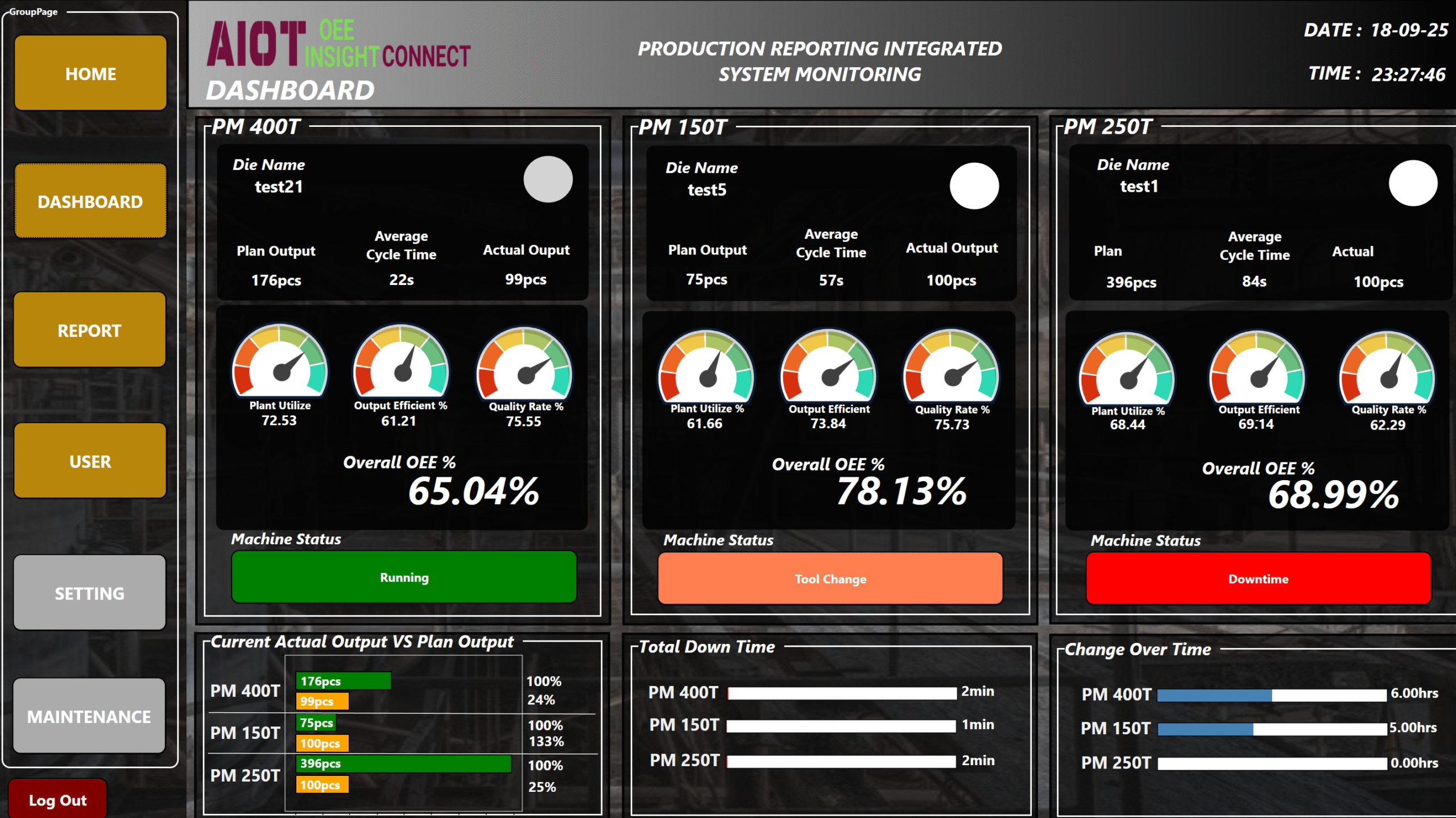
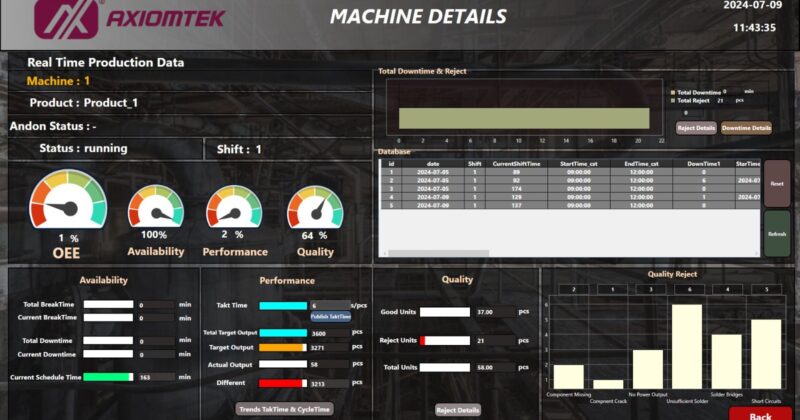
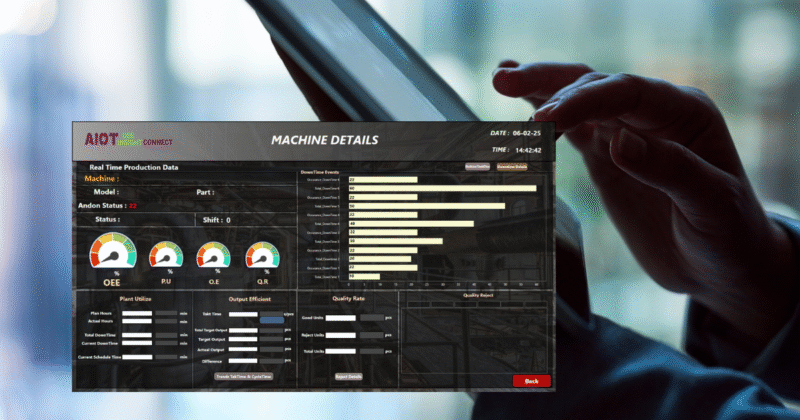
Real-Time OEE Insights Elevate Your Manufacturing with OEE Analytics Transform your production with AIoT's advanced Overall Equipment Effectiveness analytics. Gain valuable insights to boost productivity, minimize downtime, and achieve operational excellence. 50% Real-Time Monitoring: Stay updated with live data from your equipment to make quick, informed decisions. 50% Data-Driven Insights: Leverage analytics to identify trends and improve your manufacturing processes. Machine Data collection Machine Data collection The machine data collection process requires a detailed study of the relevant data from the PLC or from the tapped signal machines. Sometimes, the data collection can be a big challenge when we encounter an older machine. With our dedicated team members in this field so far, all related data can be obtained. Hosting the data Data Hosting at the OEE insight Server The machine data collection process requires a detailed study of the relevant data from the PLC or from the tapped signal machines. Sometimes, the data collection can be a big challenge when we encounter an older machine. With our dedicated...
Read More
Non intrusive Data Extraction Edge AI production efficiency Tracking

Non intrusive Data Extraction Edge AI production efficiency Tracking

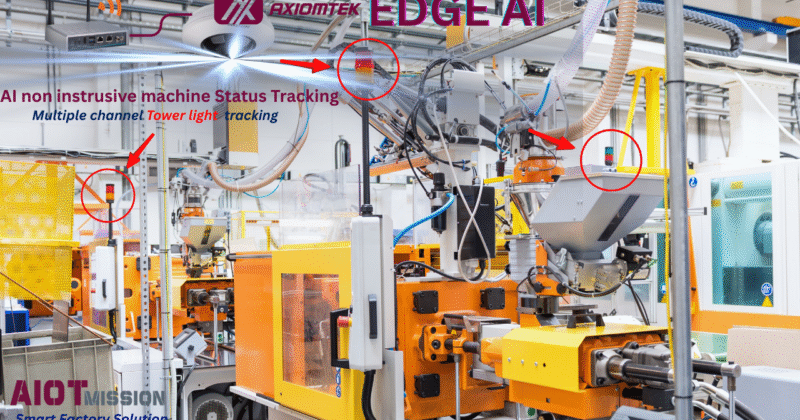
Innovation in non instrusive data extraction Shop floor data acquisition challeges One of the biggest challenges in capturing data from the production floor is acquiring the necessary information from machines that are actively running. The most effective approach is to use high-level communication via standard protocols such as Modbus or other PLC communication protocols. However, in many cases, the required data is either unavailable or originally retained by the machine's vendor.Moreover, some machines cannot afford to be shut down due to high production demand.Look to the right for a solution ➝ Learn More QuThe solution :- Non Intrusive Edge AI Data Extraction See How Today’s industrial challenges require agile solutions. Our cutting-edge data extraction technology lets you monitor progress seamlessly, ensuring enhanced productivity without disruption. “WTF EYE” – What The Fish Eye is a computer vision AI solution developed by the AIoTmission AI Team to address a common challenge on the production floor: machines that cannot be stopped and where traditional data interfacing methods are...
Read More
AIoT – Operational Technology

AIoT – Operational Technology

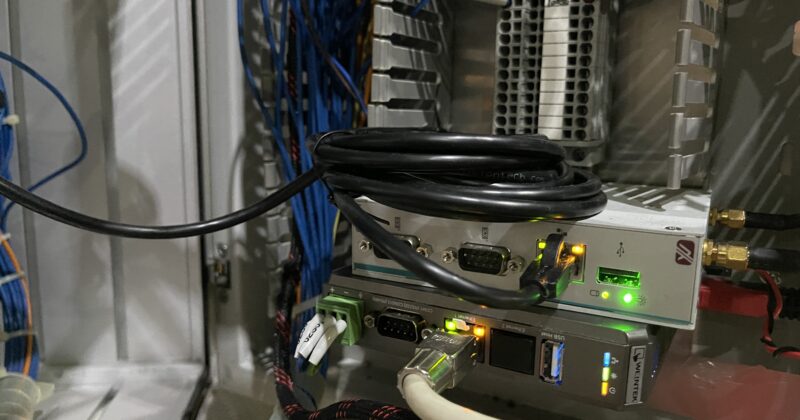
Revisiting OT ( The operational Technology ) While talking to people is always enjoyable, making machines that can communicate with each other is even more fascinating!The shop floor used to be synonymous with earning extra through "OT" 😉 —overtime. But these days, "OT" has taken on a whole new dimension: Operational Technology. Our focus has shifted from extra hours to extra intelligence—connecting machines, sensors, and systems in smarter ways.When building efficient and reliable IIoT edge devices under resource constraints, the choice of operating system plays a vital role. And extracting data from Japanese PLCs brings its own set of challenges, thanks to their tightly guarded, proprietary communication methods.Revisiting OT—this time as the foundation for AI—marks the beginning of an exciting new chapter in our industrial transformation journey. The foundation of any AI initiative in manufacturing begins with effective shop floor data collection. One common challenge is integrating data from existing equipment, particularly when it involves legacy systems or machines automated with proprietary...
Read More
The power of OEE Distiller in handling 6 losses

The power of OEE Distiller in handling 6 losses

“You Don’t Need More Machines—You Need to Measure Losses Better”When customer orders keep piling in and production can’t keep up, the first instinct is often:“We need another machine and it cost 100K " But do you really need that?Let’s look at this scenario:You have 10 machines, each producing 100 units/day. You’re running at 60% OEE.New demand = 1,100 units/day (but you're only producing 1,000)So you’re 100 units short—and considering spending $100,000 on a new line👉 But what if the capacity you need is already there—hidden inside inefficiencies?  By understanding and addressing the 6 Big Losses of OEE—(like minor stops, reduced speed, and quality issues)—you improve your OEE from 60% to 70%.That 10% increase now means each machine produces 110 units/day.End Result:10 machines × 110 units = 1,100 units/dayNo new machine needed$100K investment savedAnd long-term gains through sustained efficiencyThe Takeaway ( by distilling your efficiency with the tracking of 6 key losses) :Tracking the 6 Key OEE Losses isn’t just about monitoring...
Read More
The power of OEE 6 key losses

The power of OEE 6 key losses

You Don’t Need More Machines—You Need to Measure Losses Better Why Tracking the 6 Key OEE Losses Is More Critical Than You ThinkWhen customer orders keep piling in and production can’t keep up, the first instinct is often:“We need another machine.”But do you really?Let’s look at this scenario:You have 10 machines, each producing 100 units/dayYou’re running at 60% OEENew demand = 1,100 units/day (but you're only producing 1,000)So you’re 100 units short—and considering spending $100,000 on a new line👉 But what if the capacity you need is already there—hidden inside inefficiencies?By understanding and addressing the 6 Big Losses of OEE—(like minor stops, reduced speed, and quality issues)—you improve your OEE from 60% to 70%.That 10% increase now means each machine produces 110 units/day. Result: 10 machines × 110 units = 1,100 units/day No new machine needed $100K investment saved And long-term gains through sustained efficiency The Takeaway:Tracking the 6 Key OEE Losses isn’t just about monitoring performance—it’s about unlocking trapped capacity, avoiding unnecessary investments, and turning existing...
Read More
OEE Six Big losses #6 The Start up Defects

OEE Six Big losses #6 The Start up Defects

6 key losses -The start up Defects Understanding Start-Up Rejects in OEE: A Hidden Quality DrainWithin the framework of Overall Equipment Effectiveness (OEE), Quality stands as one of the three core pillars, alongside Availability and Performance. While many manufacturers focus on production-time defects, a less-discussed yet equally critical source of quality loss is the Start-up Reject—a type of defect that occurs immediately after a machine or line begins operation. What Are Start-Up Rejects?Start-up rejects are defective units produced during the initial phase of machine operation—either at the beginning of a shift, after a changeover, or following maintenance or equipment downtime. These are not incidental flaws; they are often symptomatic of deeper inefficiencies in the warm-up or ramp-up phase of production.These defects usually happen because machines, tools, or processes haven't reached optimal operational conditions. Factors like temperature stabilization, incorrect calibration, residual materials, or operator oversight during start-up can all contribute to this issue. Why Start-Up Rejects MatterAlthough they might seem insignificant in isolation, start-up rejects...
Read More
OEE 6 Big losses #5 The production Defects

OEE 6 Big losses #5 The production Defects

OEE 6 Big Losses - The production Defects The Power of OEE The beauty of OEE (Overall Equipment Effectiveness) lies in its comprehensive nature—it encapsulates all the essential components that define a meaningful key performance indicator (KPI) in manufacturing operations.Among the three core components of OEE—Availability, Performance, and Quality—Quality plays a critical role. Without producing a high number of good-quality units, speed and efficiency become irrelevant. No matter how fast or uninterrupted your production is, if the output is flawed, it diminishes the overall value. The beauty of OEE (Overall Equipment Effectiveness) lies in its comprehensive nature—it encapsulates all the essential components that define a meaningful key performance indicator (KPI) in manufacturing operations.Among the three core components of OEE—Availability, Performance, and Quality—Quality plays a critical role. Without producing a high number of good-quality units, speed and efficiency become irrelevant. No matter how fast or uninterrupted your production is, if the output is flawed, it diminishes the overall value.One of the "Six Big...
Read More
OEE 6 big losses #4 The small Stop

OEE 6 big losses #4 The small Stop

OEE 6 Big losses -The Small Stop While it is SMALL, it can also be very BIG! đŸ€Ș There we go again ... 6 Big OEE losses #4-The Small Stop Best way to understand small stop is like traveling on a journey towards a destination, along the way, you are estimating to reach the destination say in 1 hour, along the roadyou bump into a traffic jam, road blockages, accidents etc. These are the small stops. In the production process, minor disruptions often occur due to waiting for materials to run, delay in restarting machines after the disruption, equipment misalignment, or jam-ups. These are the common small stops that we have been focusing on.Some advance processes have built-in functions that detect the cause of these stops. These systems may rely on Stack light indicator or internal controller like PLCs to detect error codes related to the disruption. Why are these small stops important? As you know when the production is running 24 hours daily,...
Read More